I started without technology on purpose.
Instead of letting the CMS define the problem, I sat with content, product, sales, and engineering teams and asked one question: what does success look like for you?
The answer wasn't conflict — it was misalignment. Every team had clarity on their own piece, but no one had a shared picture of how sales readiness actually worked end-to-end. That gap was the real problem.
So we built one. A UX strategy grounded in shared outcomes — how content moves, how sales teams use it, how it gets supported, and how it grows over time.
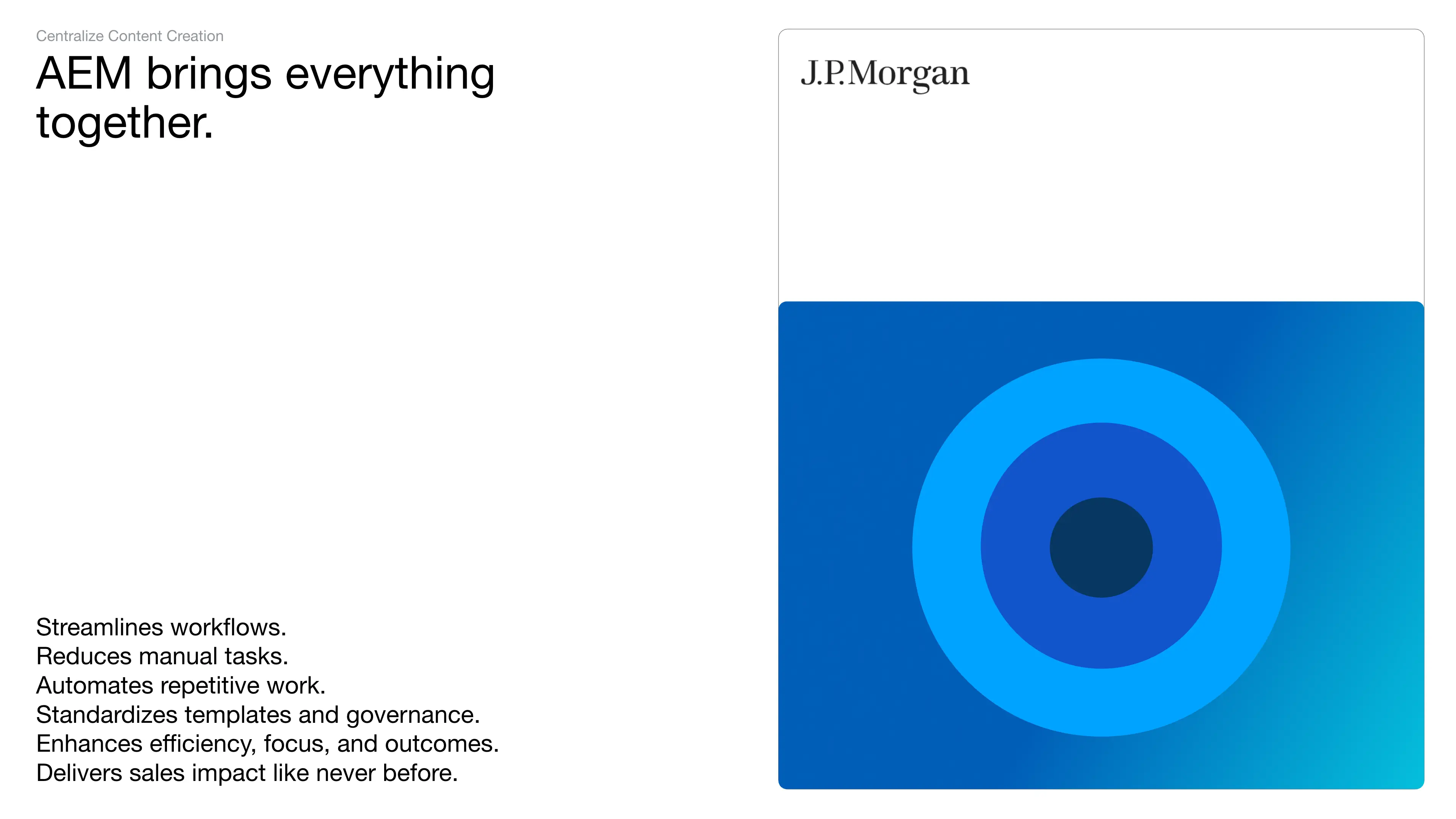
Adobe Experience Manager was a J.P. Morgan partner, and we pushed the CMS to the edge, but not as infrastructure, as an enabler. A foundation built for today that could scale by role, region, and whatever comes next.
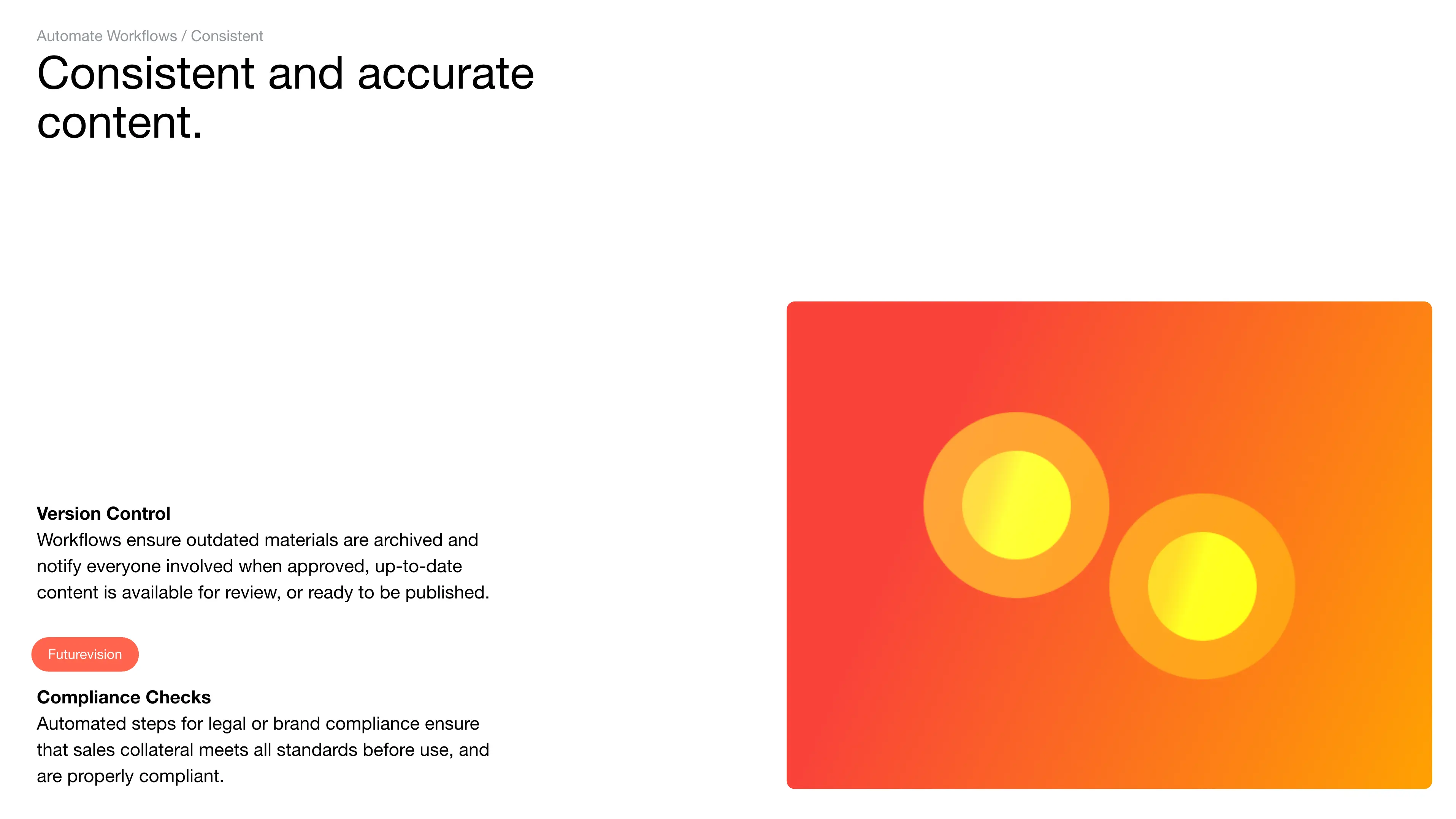
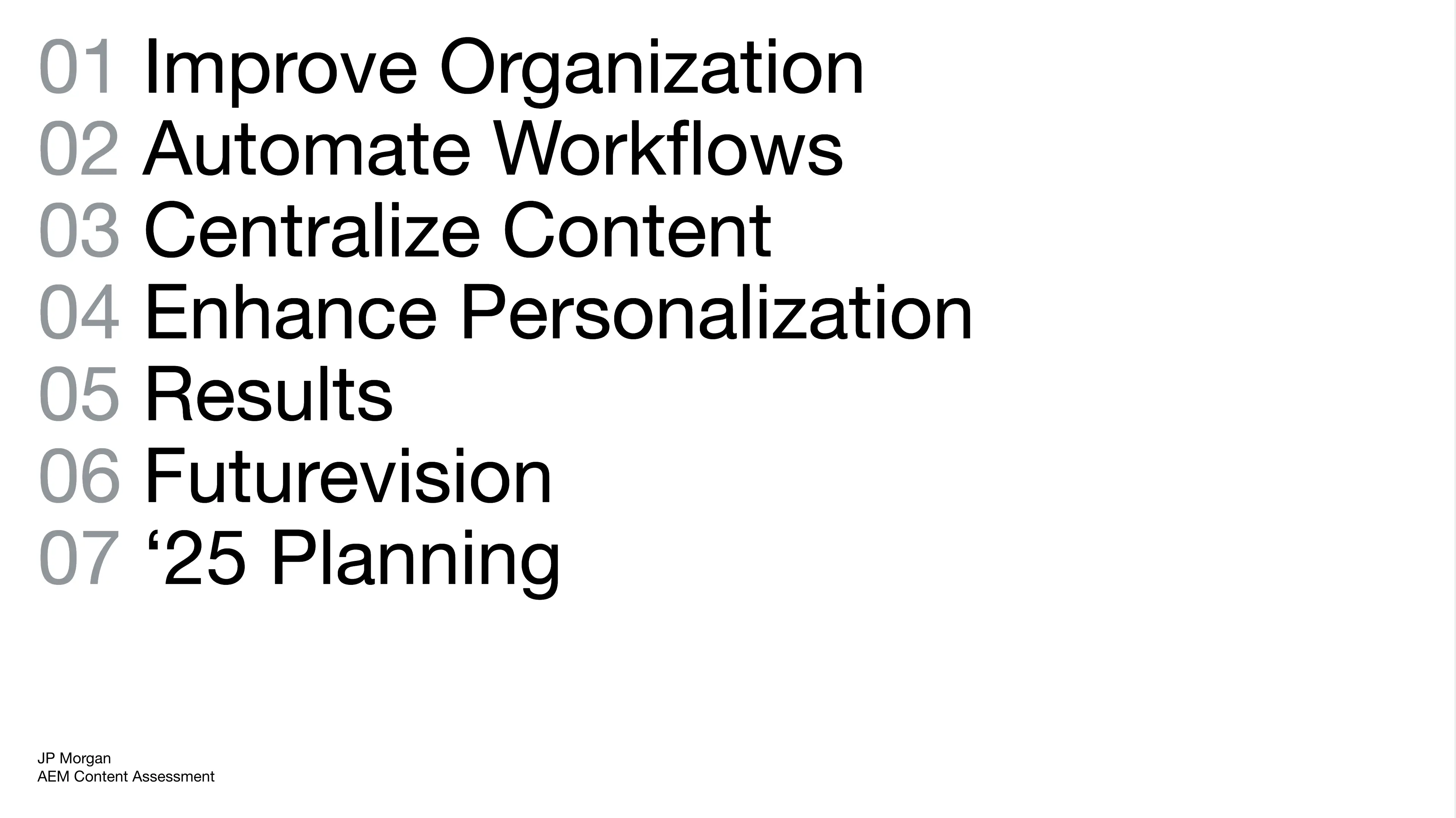
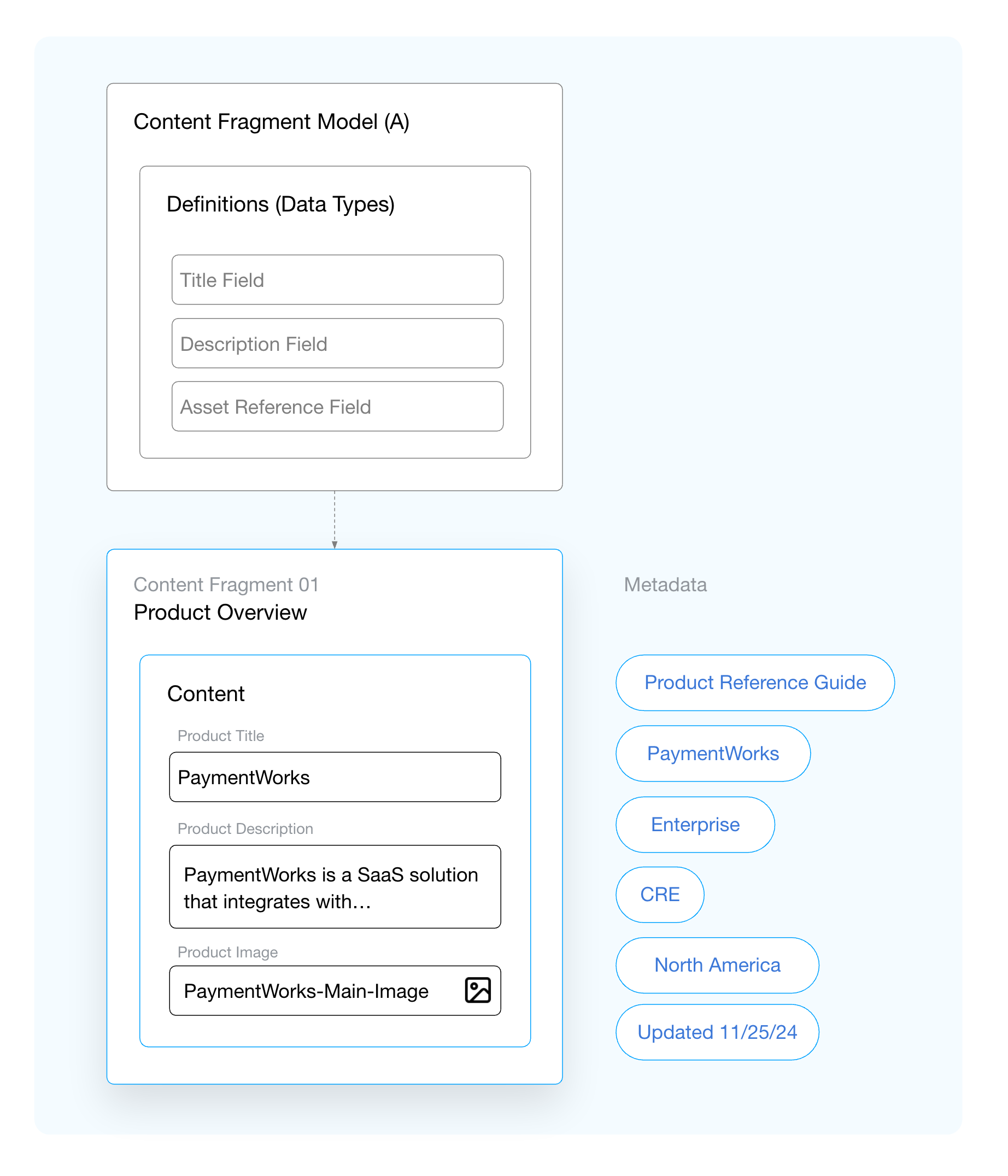
The last step was making it land with leadership. No features, no architecture decks — just simple experience models and future-state stories that showed what changes because AEM exists.
The result: a model leaders could champion, teams could execute, and the org could scale globally. The technology never drove the strategy. The people did.
Improved sales readiness & content production for 20,000+ users

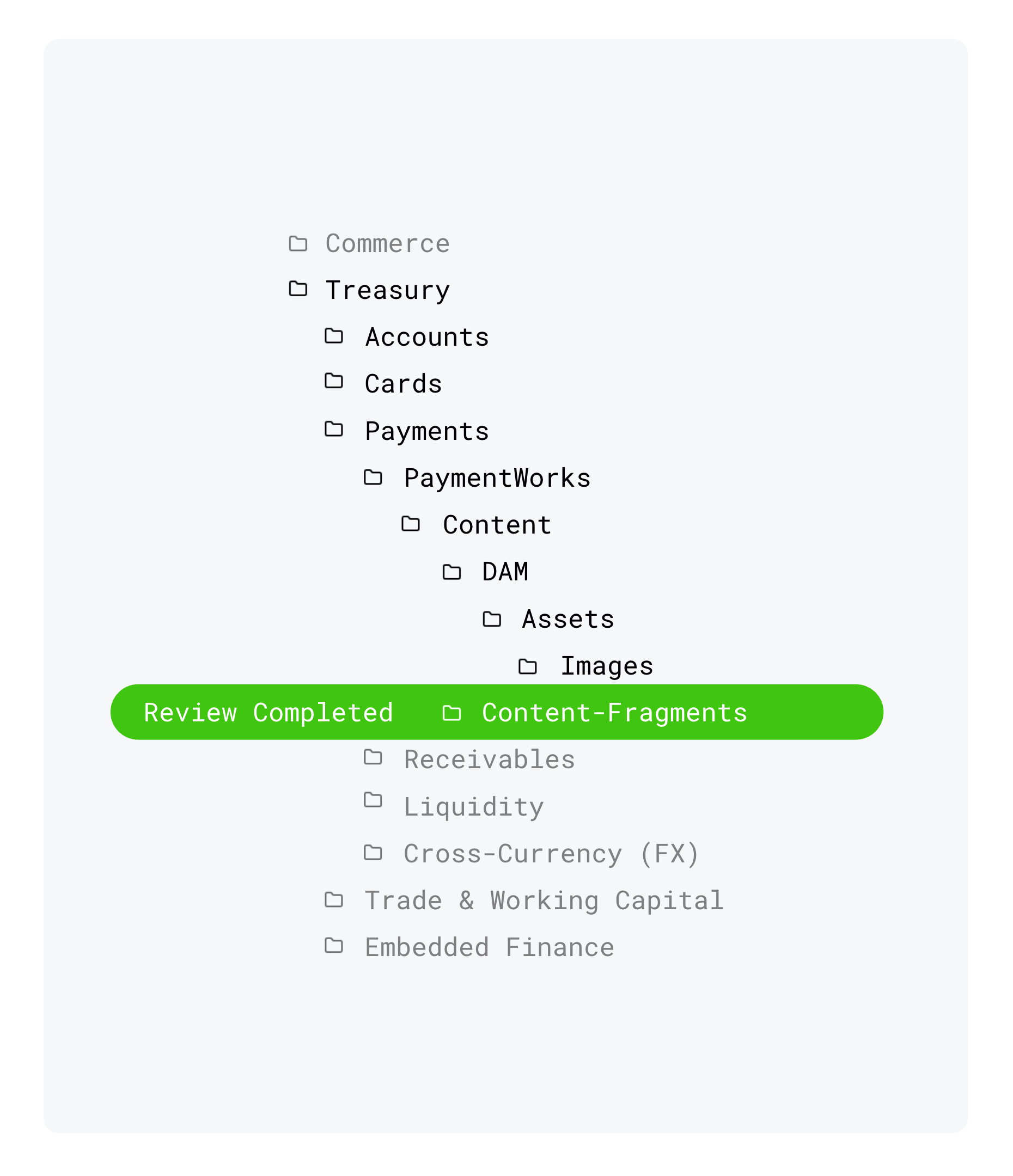
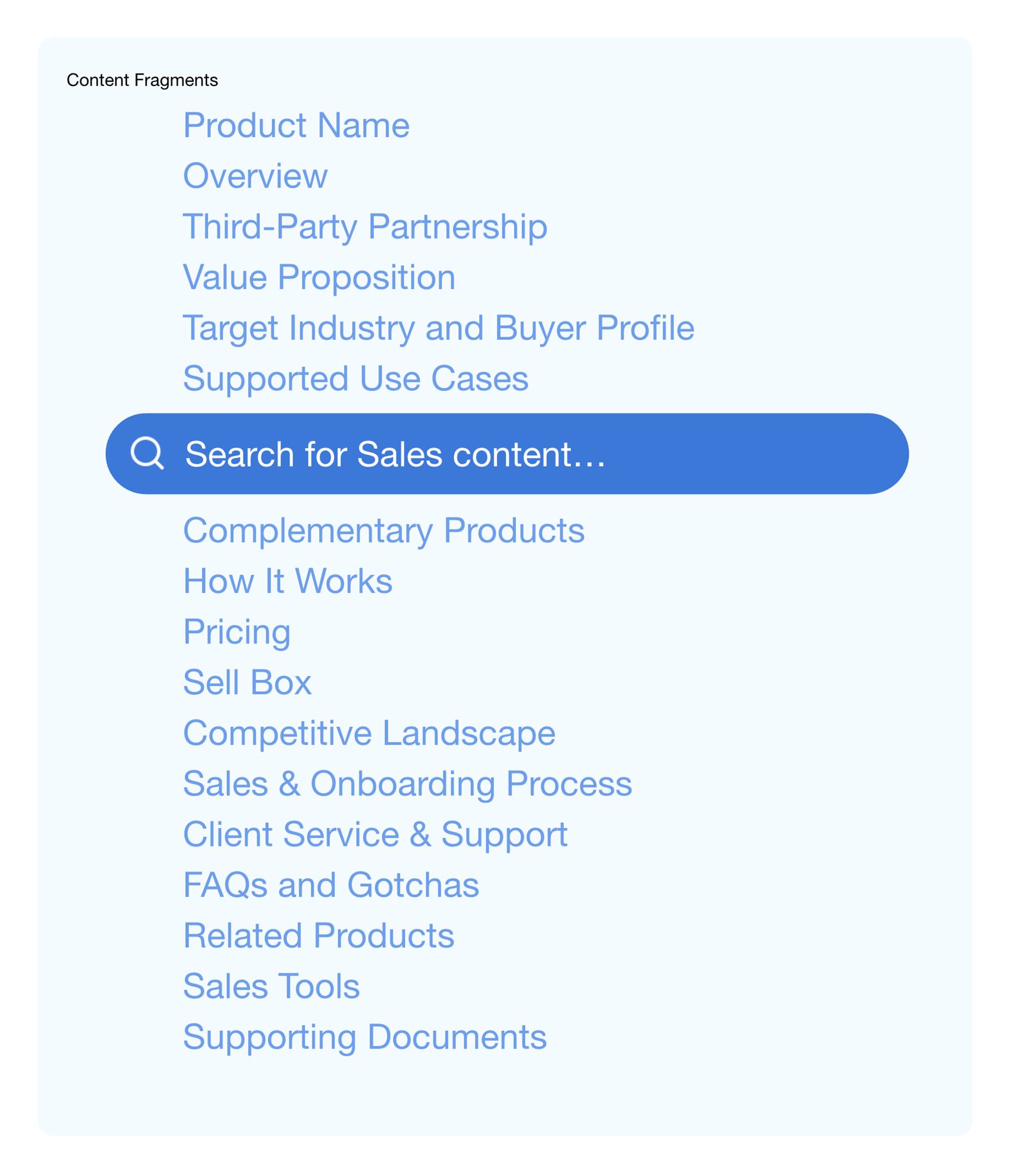
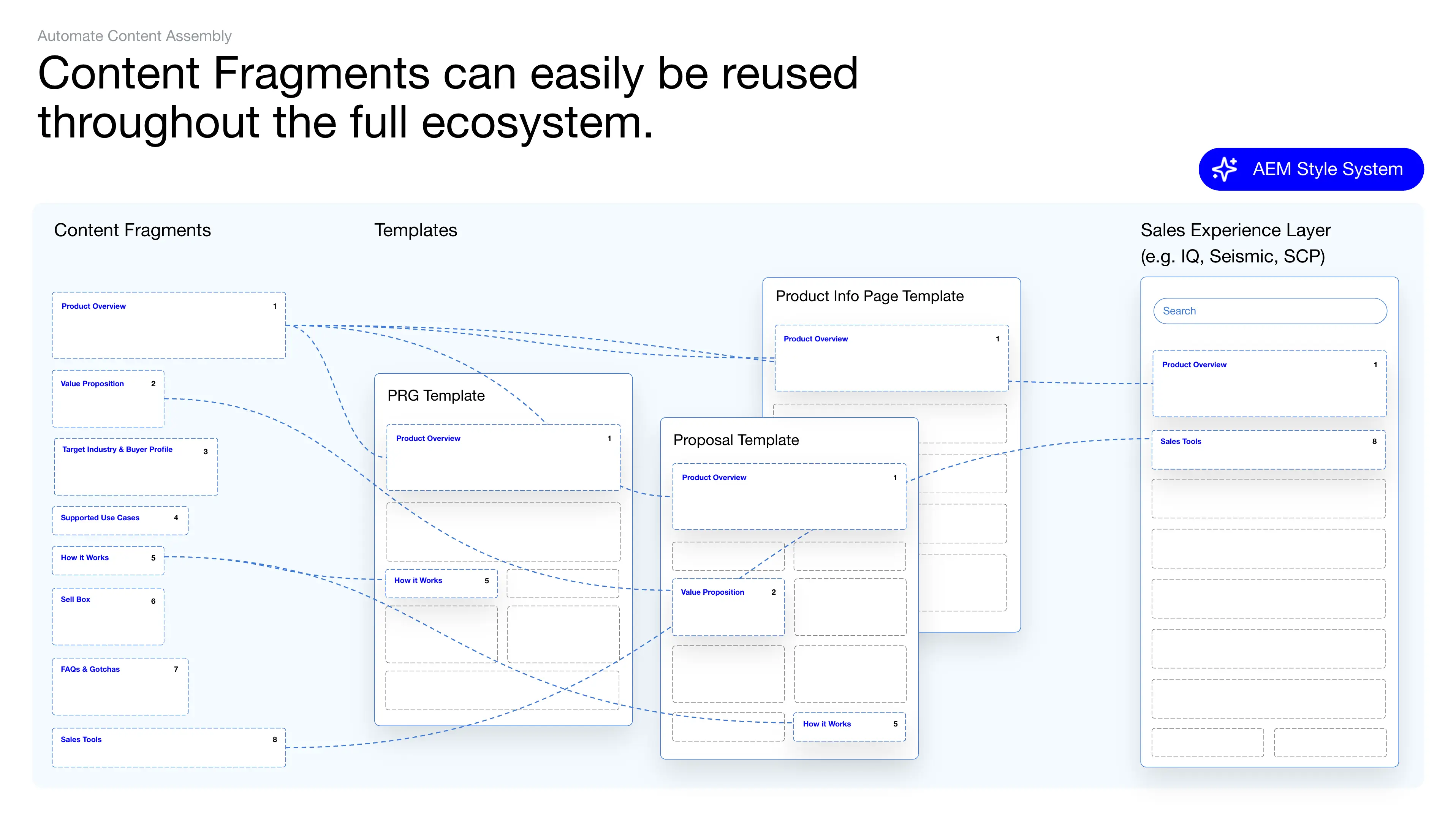

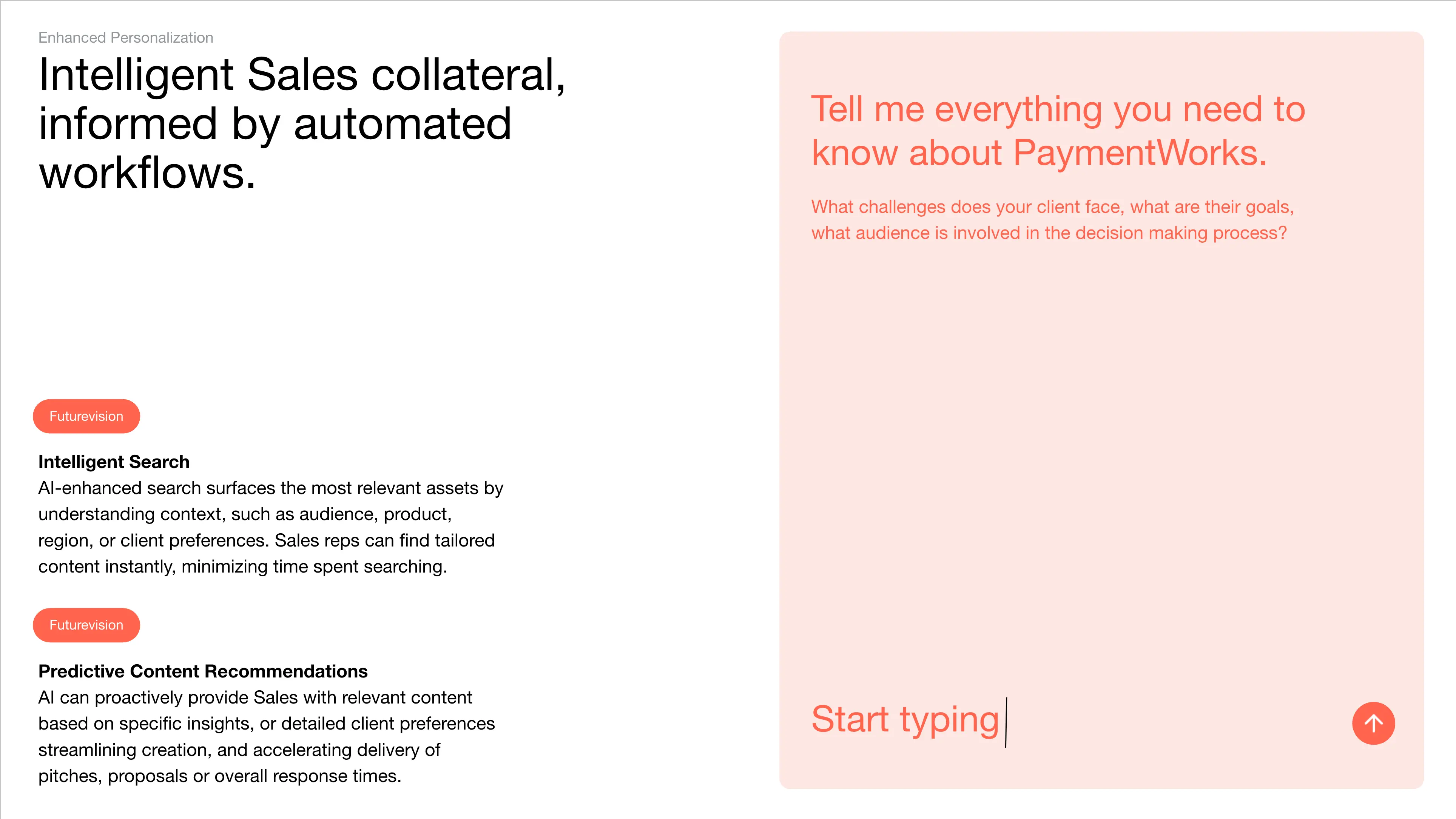
Presenting executives with a Futurevision positioned the team to operate ahead of the competition, and the opportunity to align the entire organization with Adobe's roadmap.